Wednesday, June 27, 2012

Jesus or the Rebbe: Whose the Messiah?


Awesome video. I found this on http://apologeticsuk.blogspot.com/

Michael Brown (a Messianic Jew) talks about how many Jews accept the possibility of a Rabbi who died in 1994 as being the Messiah (and think he might raise from the dead or already has raised), but don't realize that Jesus meets the specifications better than the rabbi does.

Really interesting. Dr. Brown is gracious in his presentation and has interesting conversations with Jews in New York.

Thursday, June 21, 2012

Plenty of Double Standards

As I showed in the last post, one way to show the resurrection happened is to eliminate all other possibilities. These can be categorized into two distinct subgroups. We can say the ancient sources reporting the resurrection are either 1) misinformed, 2) lying, or 3) telling the truth. All theories fall under those three umbrellas.

However, most alternative theories to the resurrection involve an evidential double standard. Here's how:

1) Theory: Disciples hallucinated resurrected Jesus

Double Standard: In every other situation in life, 11 people is enough to ascertain the bodily presence of some individual!

Example: Hallucination theory allows me to be skeptical of the presence of my own girlfriend, even when more than one person sees her.

2) Theory: Jesus had an evil twin who stole the body and pretended to be the resurrected Jesus

Double Standard: In every other situation in life where the outcome is unexpected, we do not propose ad hoc, unethical stunt doubles for everyone!

Example: Everyone who commits a crime can offer the "twin defense" and get away with it.

3) Theory: Disciples preaching of resurrection was metaphor

Double Standard: In every other situation, we take things at face value unless the person tells us something is a metaphor.

Example: Perhaps the person shouting "The building is on fire! Get out!" is speaking metaphorically?

4) Theory: Jesus faked his own death and survived, and pretended to be resurrected. 

Double standard: In every other situation, when a historical figure is brutally executed and buried, we take it for granted that they didn't survive.

Example: Perhaps Saddam Hussein is still alive, and merely survived his hanging and his burial.

5) Theory: Jesus didn't exist and wasn't crucified.


Double standard: In every other situation, when multiple ancient sources report something within less than 70 years of the event (or even as little as 5 years!), we take it for granted.

Example: Perhaps Caesar was not assassinated by the senators at all!!

6) The disciples lied about the resurrection

Double standard: In every other situation, when multiple people suffer for their beliefs, they are considered sincere. However, liars are by definition insincere.

Example: Perhaps Martin Luther never really believed in justification by faith at all, despite the repeated risks of persecution he faced because of the Protestant Reformation!?!?

7) There is not enough information to decide if Jesus rose or not.

Double standard: In every other situation, when multiple people offer honest testimony to the death of some person or their bodily presence, we take it for granted that we have enough evidence of their death and/or presence in a room.

Example: Perhaps I should be agnostic about whether or not anyone actually saw Ronald Reagan during his life? Perhaps there is not enough evidence?

Two Choices: Have Double Standards or Accept Too Many Concessions

I can go on and on. The important thing to note is that most alternative theories involve suggestions that would not be considered realistic or even remotely acceptable explanations in other situations.

This places skeptics in one of two camps (or a little of both). One can accept the implausible alternative theories and risk losing debates. Or, one can concede the point that apologists are trying to make. (Aka concede that the disciples were sincere, or that the appearances were intended as bodily).

But this leads them to concede so much that their position looks unreasonable. In fact, it ends up leading them to concede so much that more evidence would be, in practice, unhelpful in causing them to change their mind (at least in some cases). This is the inspiration for the title of this blog "Death by a Thousand Concessions." The opponents of Christianity end up conceding so much of the data that their own position becomes highly untenable to the point that more evidence for our position would be unhelpful in practice.

But!!! But!!! But!!!!! Wait a Second!!!


Isn't the resurrection just as crazy??

Unfortunately, saying the resurrection is highly improbable has a very big assumption behind it. It also misconstrues the situation (perhaps accidentally on the skeptics part).

Not by Natural Causes...

If we were to say that the resurrection happened naturally, all on its own, then this argument would have a lot of merit. Of course the resurrection is less likely than an evil twin.....if we say the resurrection happened by purely natural causes.

But that's not what any Christian is saying....

William Lane Craig points out that the contention is not that Jesus just randomly rose from the dead, as some kind of unexplained natural mystery or freak of nature. The contention is that God raised Jesus from the dead.

...but by a Personal Cause

Michael Licona points out that probabilities of this nature immediately break down when personal, free agents are purported to be involved. For example, we know that books don't pick themselves up off the floor and set on the table all by themselves. If someone where to say that, we would justifiably reject their theory. However, if someone said that a person freely picked up a book and put it onto a table, then the probability that the book wouldn't pick itself up on its own no longer has any bearing on the situation anymore.

And it doesn't even matter if we know that the personal cause exists or not. This is not how we handle things of this nature in our lives. If someone named "Alvin Plantinga" emails me, I don't have to go independently assess whether or not a person named "Alvin Plantinga" exists. The email itself acts as evidence for his existence. (For the record, Alvin Plantinga has never emailed me.) If I am skeptical of the existence of mechanics, a repaired car acts as evidence for his existence. I don't have to prove the existence of mechanics before believing that a car has been repaired!

We seem to have exhausted all the available alternative possibilities. After all, skeptics have had 2000 years to come up with them.

The Only Game in Town

So unless we want to believe that God supernaturally caused a tomb robbery and supernaturally caused the disciples to hallucinate a bodily Jesus, the resurrection is the only game in town.


Resurrection of Jesus and Process of Elimination

One way to argue for the resurrection is to argue against alternative theories. Being polemical in and of itself doesn't make one right, but it is a very necessary part of the defense of a certain idea.

Polemic in certain situations can eliminate all other options, so that only one is left standing. For example, take the evaluation of some testimony you receive. Say for example that my friend Tom tells me that he heard that my other friend (call him Frank), has committed a misdemeanor theft. There are only a few options available for how to interpret his testimony:

1) He is culpably deceiving me
2) He himself is somehow misinformed
3) He is telling the truth

Frank the Thief

We can unpack these into different subcategories of the 3 above.

  1. He is deceiving me
    1. He is lying to me
    2. He is using a metaphor that he knows I will misinterpret
  2. He himself is somehow misinformed
    1. He is having some kind of incorrect subjective experience which caused him to think he was an eyewitness of Frank's theft
    2. Frank pretended to steal and get convicted, when he really didn't 
    3. The Frank theft story is a rumor (legend)
  3. He is telling the truth. 
    1. I understood him. 
    2. I misunderstood him. 
Alternatives to the Resurrection Categorized

These have obvious analogy with the resurrection as well. We have a variety of ancient sources that say some things about the crucifixion, about the disciples, what they said they saw, and the whole nine yards. If we want to disbelieve them, we have to impugn the testimony of the source in some way. (This is the way it works with any testimony of any kind, whether day to day, or historical.)
  1. The authors of the ancient sources are lying. 
    1. The ancient source is intending to deceive me about the whole story.
    2. The ancient source is using a metaphor it knows everyone will misinterpret. 
  2. The authors of the ancient sources are misinformed. 
    1. The ancient source received legends or rumors. 
    2. The ancient source is reporting a subjective event that caused the disciples to think they were eyewitnesses when they were not. 
    3. The ancient source is misinformed about the resurrection because Jesus faked his resurrection after surviving the crucifixion. 
    4. Someone lied to the ancient source. 
  3. The ancient source is both deceptive and misinformed. 
  4. The authors of the ancient sources are telling the truth. 
    1. We understand what they are telling us. 
    2. We are misinterpreting what they are telling us. 
Obviously we can break these down even further into more subcategories. 


Process of Elimination 
  1. The authors of the ancient sources are lying. 
    1. The ancient source is intending to deceive me about the whole story.
      1. Refutation
        1. motivation for deception absent
        2. higher numbers of witnesses make deception less likely
    2. The ancient source is using a metaphor it knows everyone will misinterpret. 
      1. Refutation
        1. see above
  2. The authors of the ancient sources are misinformed. 
    1. The ancient source received legends or rumors. 
      1. Refutation:
        1. Many of the ancient sources are closer to the events than other sources reporting in ancient history. Disbelieving these would cause us to disbelieve other sources that report things we all believe in. 
        2. Eyewitnesses still alive when source was writing. 
    2. The ancient source is reporting information based on someone who was misinformed (aka disciples had hallucinations, then told source). 
      1. Refutation 
        1. Any psychological explanations hold less and less probability the more people are involved
    3. The ancient source is misinformed about the resurrection because Jesus faked his resurrection after surviving the crucifixion. 
      1. Refutation
        1. No one can survive execution and burial. 
        2. Nor does anyone have motivation to fake a resurrection after such a fate. 
    4. Someone lied to the ancient source. 
      1. Refutation:
        1. Source relatively close in time to the events 
        2. Little motivation to lie in persecutory situation the church was in
  3. The ancient source is both deceptive and misinformed. 
    1. (see above)
  4. The authors of the ancient sources are telling the truth. 
    1. We understand what they are telling us. 
      1. Resurrection is true. 
    2. We are misinterpreting what they are telling us. 
      1. "Resurrection" in that time period means what we take it to mean today.

Sounds complicated, but it's actually very simple:

But I digress! I overcomplicate matters once again....

Every alternative theory is suggesting that the ancient sources used to prove the resurrection are either lies or themselves misinformed. By normal criteria of evidence we can rule out both of these. So process of elimination leaves the "ancient sources are telling the truth" option. 


Sunday, June 17, 2012

Jesus Dies for Our Sins: Compared to Our Legal System

Within the "new atheist" subculture, a renewed interest has been made in making fun of certain aspects of Christianity, which is to be expected. From time to time, the atonement of Jesus has been a target of these insults.

I would like to be frank without being too blunt, but I would like to point out that those who publicly make fun of the atonement generally have no idea what they are talking about at all. The atonement is such a theologically rich concept which I know less about than most other central Christian beliefs. But the taunts of the New Atheists usually show a remarkably poor understanding of what the atonement even is in the first place, let alone a good reason for disagreeing with it. It's as if they tried to make fun of something before they even knew what it was, in my honest opinion.


Glory to Jesus Forever

What is the Atonement?

But people do have questions about the nature of the atonement, which is fair enough. The doctrine of atonement, as generally understood by American Christians, is of penal substitutionary atonement. This means that humans are so guilty of sin that they are worthy of physical and spiritual death. However, instead of punishing us, God punished Jesus, who was the voluntary recipient of the punishment we deserved. Atonement is much, much more than this as well, but this is sort of the rough and ready definition of it which is commonly adhered to. I commit a crime, have to pay a fine, BUT, Jesus pays my fine instead.

Some people raise interesting questions about the atonement. For example:

  1. How can one person pay for the sins of everyone in history?
  2. Why did Jesus just have to die, instead of go to hell for us?
  3. Why do only the believers have the benefits of this applied to them, as opposed to everyone else?
  4. How is a human sacrifice ethical? 
  5. Is there any analogy to this in our legal system?
A lot of these will be answered by discussing the analogy in our legal system. 


Vicarious Liability
My uncle, Kurt Anderson, is an insurance attorney (and a smart and well-read Christian), so I asked him about how the atonement would work in our legal system. 

He told me that the best analogy is that of "vicarious liability." This seemed interesting because the word "vicarious" often precedes the word "atonement" in theological discussion. In law, there is a provision where a person in a "senior" type relationship is held liable for the actions of the "junior" in the relationship. For example, employers are sometimes held responsible for accidents or damages caused by employees. Furthermore, there are situations where parents are legally responsible for the behaviors of their children. 

The analogy would be as if Jesus voluntarily entered into a relationship like this with every human, making himself liable for all of our misdeeds and sins. As a result, Jesus was punished instead of us, because he voluntarily made himself liable for all of our sins. (3)

Obviously, this isn't a perfect analogy. But the comparison would be that what we do on a small scale in American law, God did on a very big scale in his divine court system, so to speak. For example, vicarious usually doesn't apply when jail sentences are involved (according to the supremely reliable source: Wikipedia). But perhaps God allows vicarious liability to work in every situation in his own court system.

Other analogies would include things such as paying for someone else's punitive damages in a court case, at great personal cost to themselves. As my uncle said, you can't insure yourself ahead of time from punitive damages. However, there is nothing stopping someone like Bill Gates from giving you a really big Christmas present, by which you can pay those punitive damages. ("Punitive" here is in contrast with compensatory damages.)


Christ the Representative

All of this may clear things up a bit more, but doesn't cover every aspect of the atonement. Christ's actions were also representative in nature. For example, the President acts as a representative for the people in negotiations with other countries. Congressmen act as representatives for certain states or areas of states. According to Christians (and this is very clear in Paul's writings), Adam acted as representative for the human race when he sinned, so all of humanity fell. Likewise, Christ, in his sacrifice, acted as our representative. 

I have barely scratched the surface on the meaning of the atonement. Of all the topics I feel somewhat qualified to at least blog about, the theological nature of the atonement is where I'm at my weakest, to be completely honest. 

The Atonement: Does It Make Sense?

As for the questions people raise, here are some brief replies:

1) How can one person pay for the sins of everyone in history? 

There are three responses. One, Christ acted as their representative. Two, Christ took on vicarious liability for the groups actions. Three, Christ, as the Son of God, is infinite in value. So his death is sufficient to cover every human being worthy of death. 

2) Why did Jesus only die for us, instead of going to hell for us forever?

This is a really good question. My answer is that no one actually goes to hell for any specific sin or sum of sins they commit in this life. Hell is reserved for a very permanent sin of rejecting God forever, and the consequences that result from being separated from him. So, it is my contention that Christ's suffering did not have to be "infinite" for it to be a full covering of sin. Christ took on the totality of God's wrath for specific sins we have committed in our lives.

3) Why do the benefits of the atonement only apply to believers?

God only wants to restore his relationship with people who actually...well...want that relationship restored in the first place. Faith is the terms by which God has chosen to save human beings. So in that sense, God gets to set the terms by which he forgives people. (4) If someone says they will pay my fine in court only if I "like" a certain charity on Facebook, or anything else, its only fair that you have to follow through on their terms.

Someone may respond and say that God would be more loving if he just forgave everyone. The issue is much more complex than that, because God is making every possible effort to bring people to faith in the first place. (2 Peter 3:9) Second, heaven wouldn't be heaven without a restored relationship to God. If someone doesn't want a relationship with God, he has no obligation to save them. 

4) How is human sacrifice ethical?

The reason human sacrifice is unethical is largely because its coerced. Apostate Israelites who sacrificed their children to Molech certainly did not have consenting children! Nevertheless, Christ voluntarily gave up his life so we could be saved. 

William Lane Craig's question of the week actually provided the inspiration for talking to my uncle, an insurance attorney, about some of the legal analogies to the atonement. That original post can be found here:


In another post, I will talk more about the atonement and why the earliest Christians believed in it. Again, the atonement is where I am at my weakest as far as theological understanding, but this post should quickly show critics that the concept is much more rational than they make it out to be.


Photo Credits

1) https://blogger.googleusercontent.com/img/b/R29vZ2xl/AVvXsEjkMpz4liWBeVcysyUuImk7zNg8Q3TwMqIZ5bRQY2Evz7R84_nH1ActoC-pEdNVcQ4I7OgoPOQTWyOaq4twIjTPUJoIQwSbbbFEcETnGLxcz_-ef9fc98CXrmZUnKlrEsXPqjPoqCHdjA/s1600/JesusOnCross.jpg
2) http://www.repotimes.com/main/wp-content/uploads/2011/06/Judge-using-Gavel.jpg
3) William Lane Craig comes to a very similar, though not identical conclusion in his question of the week on the atonement. He was the inspiration for my discussion with my uncle.

4) http://www.reasonablefaith.org/molinism-and-divine-election


Friday, June 15, 2012

A Sick Experiment: The Resurrection Challenge

So I was thinking......

A lot of people apparently think that its no supernatural feat that 12 men could be convinced their friend had resurrected AND that they had seen him...all within less than 3 days after his death.

But I started to push this idea to its logical conclusion. There are some Christian groups that like to offer a monetary reward to people who can, for example, fulfill 8 Messianic prophecies.

But what if they did it with the resurrection? Obviously it would be an unethical sort of thing to do, so its going to be a thought experiment in this case, and not a real bet.

But what if???


The Big Bad Bet

What if we put out a $5,000 reward to any person or organization who could do the following:

The Goal*:

  1. Convince 12 Christians that a recently dead friend had been "resurrected." 
  2. Convince those 12 Christians (through drugs or delusions or whatever) that this resurrected friend wasn't just resurrected, but had personally appeared to each of the 12 Christians.
  3. The hoax has to be pulled off in less than 3 days........
Rules:
  1. No holograms or modern technology allowed
  2. The Christians get to know the burial location of their friend
  3. Drugs ARE allowed, hallucinogenic or otherwise
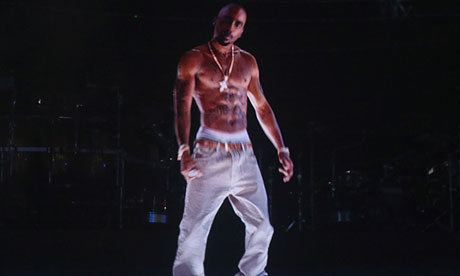
CGI of Deceased "Tupac" Performing in Concert

Think about it.

Keep in mind you don't just convince the 12 Christians that their friend has resurrected. You have to convince each of those 12 Christians, through inducing false memory syndrome or hallucinations, that the 12 Christians themselves have seen their dead friend after his death. Convincing them that you are an eyewitness is not allowed. You have to convince THEM that they are eyewitnesses. 

(By the way, the appearances to the disciples and the belief that he had been "resurrected" are accepted among over 99% of scholars who are published on the historical Jesus. So my challenge is historically authentic.) (1)

Easier To Hoax Than Jesus' Resurrection

I am even making it easier to hoax than the resurrection of Jesus:

1) Christians are more open to the idea of a unique individual resurrection before the general resurrection at the end of time. Heck, they believe in one. So convincing this group that their dead friend was raised and appeared to them should be easier to convince than Jews. So any non-Christian group accepting the resurrection challenge is already at an advantage over Jesus' resurrection.

2) All things being equal, it is easier for something to happen if someone tries to make it happen, rather than it happen by accident. It is much more likely that two women will wear the same dress to an event if they try to wear the same dress, than if it happens by coincidence. Therefore, if we let a non-Christian team or organization accept this challenge, they will have yet another advantage over the circumstances surrounding Jesus' resurrection, since they get to try to hoax it.

3) Furthermore, whether it was 36 hours or 72 hours, the disciples were saying "three days later" or "on the third day." The traditional Christian belief is that it was 36 hours. But I am allowing 3 full days. Again, its a lot easier to convince people their friend has been raised when given 3 days instead of a day and a half, like it actually was. 

4) Whoever the "victim" is, its highly impractical that they be the victim of a public execution! The organization accepting the challenge would have to prey on some Christians who had a recently deceased friend who died by natural causes. But of course, doing away with the body is a lot easier when they haven't been publicly executed!


Hold Up....

Someone may not concede my challenge. Perhaps they disagree with the historical facts I am using. 

Perhaps they say that they think the disciples actually lied. OK, I can work with that. In that case, the "resurrection challenge" would be to convince the Christians themselves to hoax the resurrection of their friend....and face criminal charges as well. This may be harder than my challenge, because the idea that any friendly or semi-ethical person would try to hoax the resurrection of their recently deceased friend is just disturbingly immoral. 

What if they say that by "resurrected," the 12 Christians don't have to mean bodily raised from the dead? Fine. But there's the rub. "Resurrection" is not a metaphoric word in Christian subculture. So even if they mean it metaphorically, you have to get them to use the term "resurrected" or "raised from the dead" and fail to explain that it is a metaphor... This is exactly the situation the disciples were in, because for that time period, "resurrection" was not a metaphoric word. (2) If it was going to be used in this way, it was up to them to clarify as such. Which they didn't.....

So I've Been Thinking

So I have been trying to think of what I would do if I had to accept my own challenge. This seems like an extremely difficult task....perhaps impossible. I honestly doubt that I could pull it off, especially if I wasn't allowed to use any kind of modern technology. 

Seriously. Hoaxing a resurrection in three days is hard enough. But trying to convince the people that you are hoaxing that THEY are eyewitnesses......all in just 3 days.....well that's just absurd. 

....But if this is impossible when someone tries to hoax it, how much more impossible is it to happen by sheer accident?

Something to think about. 


*P.S. This isn't a real bet. I can't think of any ethical way to do this challenge without spending a lot of money on the hoax. 

3) Tupac Photo
4) Image for electric chair


59 Areas of Agreement between Paul and Jesus....in the book of Matthew Alone


As I said in a recent post, I showed how there is a remarkable and numerous similarities between what Jesus said about the second coming, and what Paul said about it. I leave that part out, since I have another post on Matthew 24-25 and agreement with Paul.

I am very lazy and did not put citations by this. But what I did was go through the teachings found only in Matthew and wrote where Paul agreed. Most of these are teachings in undisputed Pauline letters:
  1. aversion to testing God/Christ 
  2. Rejoicing in persecution for Christ
  3. The sad will be comforted
  4. Against antinomianism 
  5. Christ is the goal of the Law
  6. A high priority to get rid of anger between brothers
  7. Negative view of lust
  8. Eternal implications for living a lifestyle of anger or lust
  9. "Yes, yes" and "no, no"
  10. Same teachings of view 
  11. Rather to let the person with the lawsuit win than to sue back
  12. Not retaliating
  13. Greed is idolatry 
  14. Those who judge others are hypocritical 
  15. do not worry/ pray with requests/ God will supply the needs of those who serve him
  16. Asks for good gifts (Paul interprets this as spiritual gifts)
  17. The saved are apparently a minority 
  18. Bearing "fruit" to good deeds or to bad deeds
  19. Those who don't bear fruit are "destroyed" or "destruction"
  20. "Kingdom of God" an eschatological reality, entrance of which contingent upon performing God's will
  21. Building a good house on a good foundation 
  22. People from the whole word will come to God's kingdom, while many of those originally in the kingdom would be rejected 
  23. Jesus is in relative poverty 
  24. Christ comes to call and save sinners
  25. Christ is the groom
  26. Gaining new converts is called getting a "harvest"
  27. God's servants are worthy to be paid
  28. Paul a witness to Gentile politicians
  29. Confessing Jesus needed for salvation
  30. God conceals truth from the wise, and reveals it to people of humble knowledge 
  31. People of Christ are "brothers"
  32. "sowing"/"reaping" and as a result "reaping" a "harvest"
  33. Both quote Isaiah about callous heart and not hearing and understanding
  34. Money causes people to fall away from Jesus (Timothy)
  35. Foods do not defile a person
  36. Jews demand miracles 
  37. Jesus is the Messiah
  38. Jesus comes with the Father and angels 
  39. God repays according to deeds
  40. Everything is given up for sake of Christ
  41. "Take up their cross and follow me" and Paul's being "crucified with Christ"
  42. Having a faith that moves mountains 
  43. Christ is above human rulers but still pay taxes nonetheless
  44. keeping someone from "stumbling" into sin
  45. Jesus doesn't want anyone (little ones?) to perish
  46. Do not associate with brothers who persist in sin
  47. Forgive as God forgave you
  48. Idea of no divorce, but singleness to serve the kingdom of God a higher path for those who can bear it
  49. Christ's humility and love an example to serve one another
  50. Jesus is the cornerstone and stumbling block
  51. Pay taxes
  52. Resurrection of the dead at end of time
  53. Messiah is the Son of David 
  54. Messiah is the Lord
  55. "Gospel" will be preached throughout the world
  56. References to the "Father" the "Son" and the "Holy Spirit"
  57. Jesus was crucified 
  58. Jesus was betrayed 
  59. Jesus rose from the dead and appeared to followers


Again I am very lazy so I have not cited this. But if anyone reads this and wants citations I will provide them the moment they are requested......

But again the issue is raised. It's relatively easy to show that the direction of the "borrowing" of the ideas would be Paul borrowing from actual teachings of Jesus, not people inventing parables that cherry pick and stylistically change Paul. After all, you can't say Paul misrepresents Jesus and at the same time say that those who wrote the Gospels borrowed from Paul. (However, I have no idea of anyone who claims this to begin with.)

So if Paul is making allusions to Jesus teachings in the 50's and 60's A.D., then that means that material in the gospels is much earlier, and likely from eyewitnesses, whom Paul knew. (see my argument for this here).


Wednesday, June 13, 2012

Demons and Aliens: Is There a Major Difference?

Atheists and naturalists are critical of Christians for their beliefs. Belief in gods and demons is, for them, and indication of being influenced by mythology and not paying attention to new evidence from science.

Such a disposition against belief in gods or demons is found in the title of Carl Sagan's book "The Demon Haunted World."

But are we really that foolish for believing in demons? Some atheists are at least open to aliens or life on other planets. Let's compare traditional beliefs about aliens (in culture) with traditional beliefs about demons.


Traditional Characteristics of Aliens and Demons

Both demons and aliens are:

1) non-human persons
2) Capable of inter-dimensional travel
3) Are hostile to humans
4) Can change form
5) Can read minds
6) Have religious practices surrounding them (UFO cults, witchcraft)
7) Appear humanoid and frightening

Evidence for Aliens vs. Demons

I actually have more evidence for demons than for aliens of this type. The principle evidence of aliens surrounds 1) UFO sightings and 2) alien abduction reports. UFO sightings aren't really evidence of aliens in the traditional sense, because no is actually seeing "little green men" who are performing the characteristics listed above. However, alien abduction reports would work as evidence.

However, I don't know anyone who has been abducted by aliens. I know at least 2 people who have seen a demon in unexpected circumstances, and became extremely distraught by it. (Where talking like physically seeing it or it talking to them). I am not even sure if one of them is a religious person. I also have read a book where the author mentioned seeing a very frightening face of a demon while laying in his bed (the book wasn't about demons, but about something related to Christian life or something).


Aliens and Demons: Is There a Major Difference?

This is not to say that all or even any of these reports should be believed (about aliens or demons). But it shows that a belief in demons is more rational than belief in aliens if we base the evidence solely on observation. I have more independent testimony of the observation of demons than of aliens. But this is only if we can actually differentiate between the two based on appearance.

Someone may retort that the universe is so big that life had to evolve elsewhere. But this says nothing about the qualities of this life. If I was to meet an alien that met the traditional criteria I list above, I would have no reason to assign the title "alien" or "demon" to it. In fact, I would not know of any actual difference between the two. If I met some creatures of this nature, it may as well be a demon.

Someone may reply and say well demons used to be in the presence of God, but rebelled, whereas aliens didn't. But how would I know if the "aliens" were unaware of God? If the aliens are hostile to humans, for all I know, they know about God and hate him too. Someone may say that demons are "non-physical" whereas aliens are "physical." But there is no basis in the Bible for such a distinction. There is a basis for saying that angels/demons can do violent and physical things and change form- just like an "alien."

Someone may reply and say that on this standard, how do I know that the demon appearances are actually demons and not "aliens" instead? I don't. If I saw something that looked like an "alien," I could just as easily say the demon is changing its form to deceive us of its origin.

There is simply precious little practical difference between "aliens" and "demons" as traditionally understood.

On another note, this is why its unreasonable to have your faith affected by the discovery of "extraterrestrial life".

What Difference Does It Make?


None of this is at all intended to provide evidence for aliens or demons. But if you are open to aliens, but closed to demons, you may have to rethink how consistent you are being.